
At the IPCEI ME/ CT General Assembly held in The Hague, key players gathered from across Europe’s semiconductor ecosystem. As one of the European Union’s flagship industrial initiatives, IPCEI ME/CT aims to reinforce technological sovereignty across the full value chain—from materials and wafer processing to advanced packaging, power electronics, and secure communication systems.
To emphasize the participants work and results, twenty-two posters were presented during the event by their projects’ leaders. They highlighted significant scientific and industrial progress in areas such as Silicon Carbide power electronics, MEMS manufacturing, embedded cybersecurity, photonics, and sustainable semiconductor production. Each poster also presented the challenges yet to overcome and/ or the value proposition offered to potential new partners
Technological Perspective
Taken together, the contributions presented in The Hague illustrate the systemic nature of IPCEI ME/CT. Rather than focusing on isolated technological advances, the initiative addresses the semiconductor ecosystem as an interconnected whole. Power electronics innovations in Silicon Carbide are progressing alongside breakthroughs in MEMS scaling, advanced packaging, and photonic communication. At the same time, cybersecurity and sustainability considerations are increasingly embedded directly at design and process levels.
This convergence reflects Europe’s strategic objective: to ensure industrial competitiveness while aligning digital innovation with environmental responsibility and supply chain resilience. The posters demonstrate not only technological maturity, but also a clear intent to scale solutions toward industrial deployment.
Nine contributions were authorized for publication, enabling wider dissemination of results and strengthening cross-border collaboration within the program.
Posters Highlights :
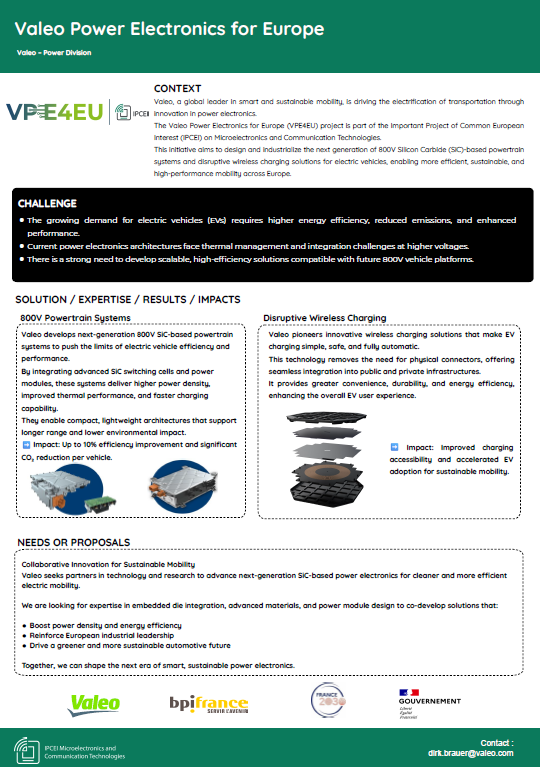
Valeo’s VPE4EU project focuses on the industrialization of next-generation 800V Silicon Carbide power electronics for electric vehicles, including high-efficiency architectures and wireless charging solutions. The company is seeking embedded die partners to co-develop high-density, high-reliability power modules suited to future EV platforms. Dirk Brauer explains the project here.
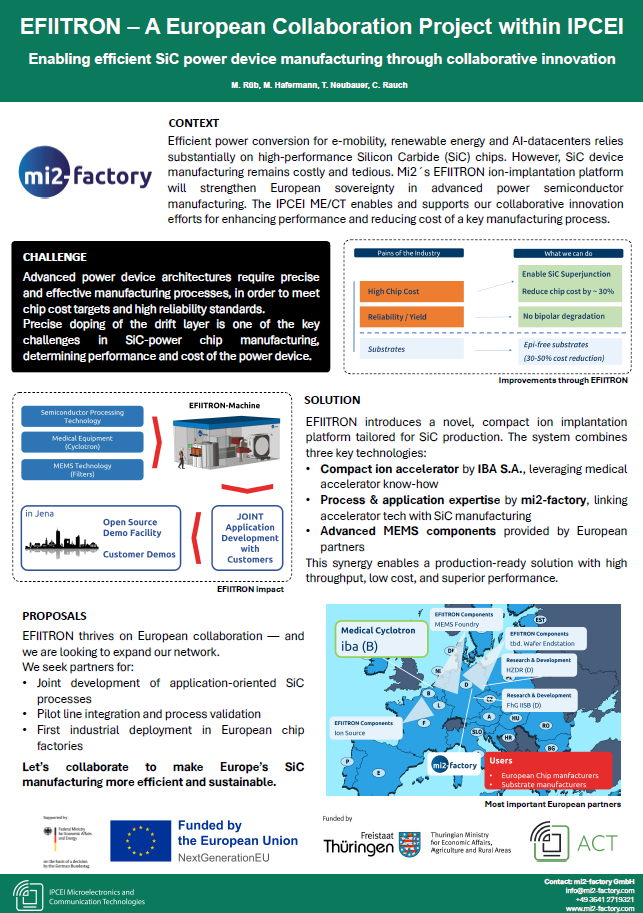
mi2-factory GmbH introduced EFIITRON, an innovative ion implantation platform integrating a compact ion accelerator with MEMS and semiconductor technologies to optimize SiC device manufacturing. The objective is to reduce production costs while enhancing device performance for mobility and industrial applications. Have a look to Michael Rueb presenting the poster here.
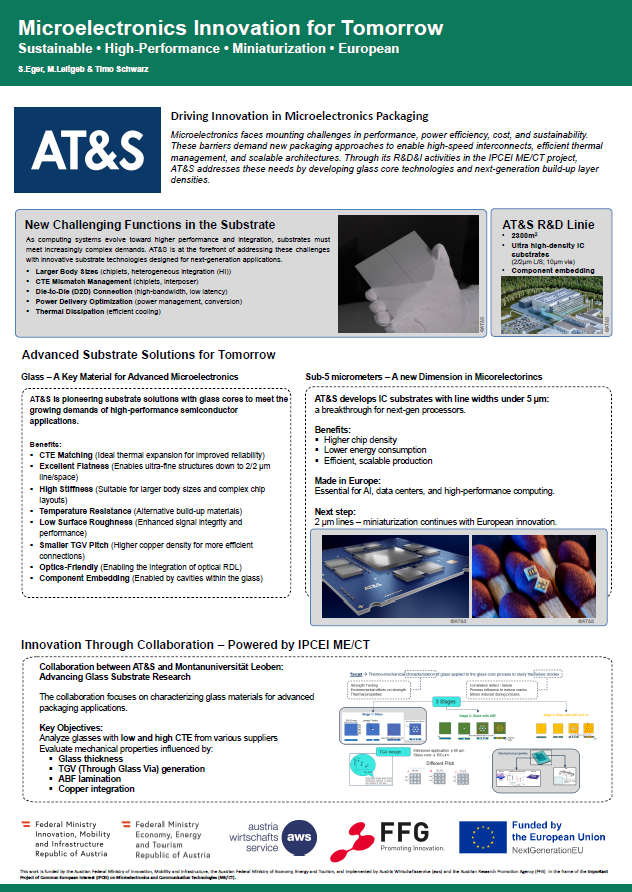
AT&S showcased advances in sustainable microelectronic packaging, emphasizing miniaturization, thermal management, and eco-design integration. Collaboration within IPCEI is central to accelerating industrial deployment of these solutions.
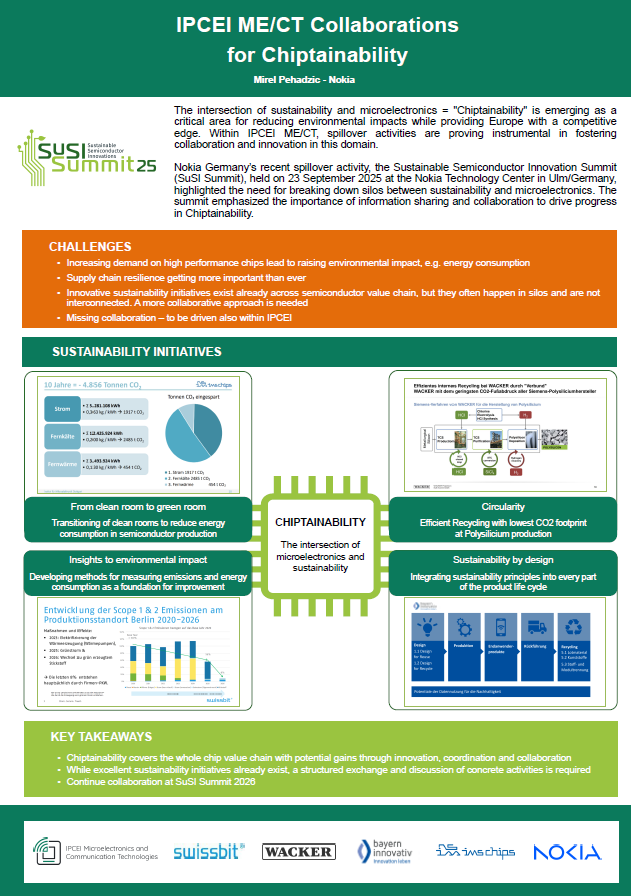
Nokia introduced its “Chiptainability” concept, promoting sustainability-by-design, energy-efficient cleanroom operations, and circular value chain practices within semiconductor manufacturing. To know more, have a look at the presentation by Harry Kaib here.
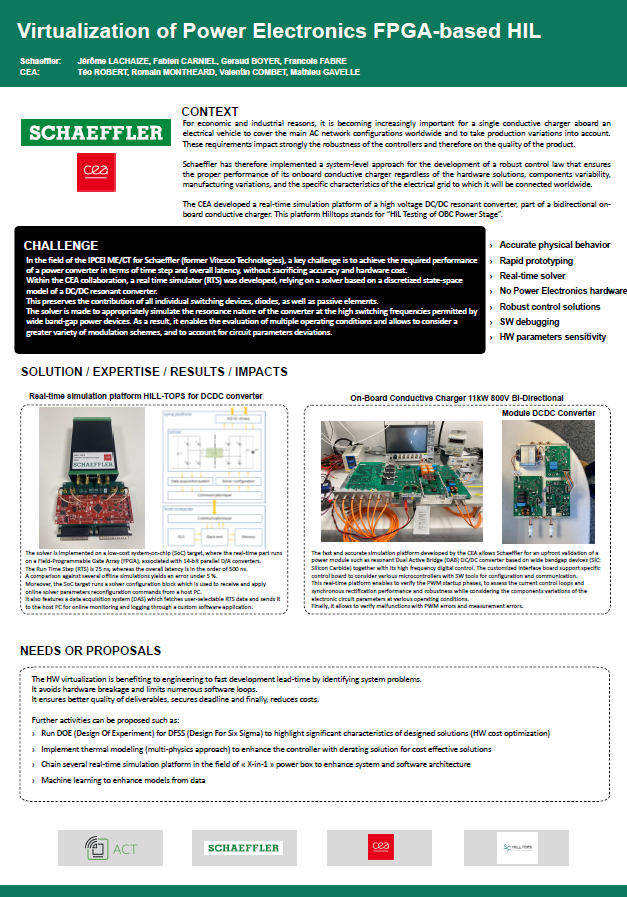
Schaeffler in partnership with CEA demonstrated a real-time FPGA-based simulator for resonant DC/DC converters, enabling highly accurate modeling with ultra-low latency—an important step for faster validation cycles in advanced power systems. Have a look at the presentation by François Fabre and Mathieu Gavelle here.
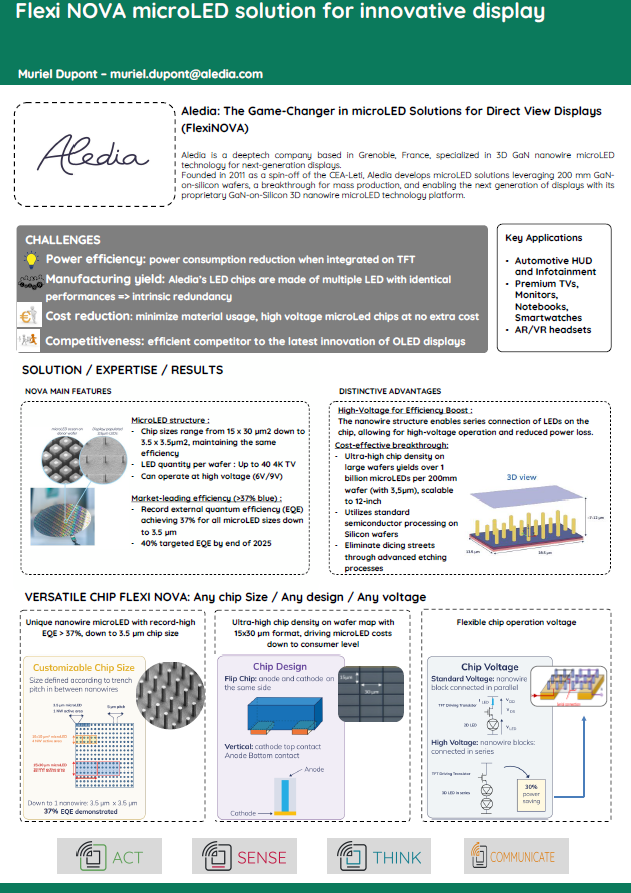
Aledia introduced its Flexi NOVA microLED approach, offering flexible chip architectures that optimize efficiency, yield, and cost for next-generation display technologies. Listen to Muriel Dupont explaning the poster here.
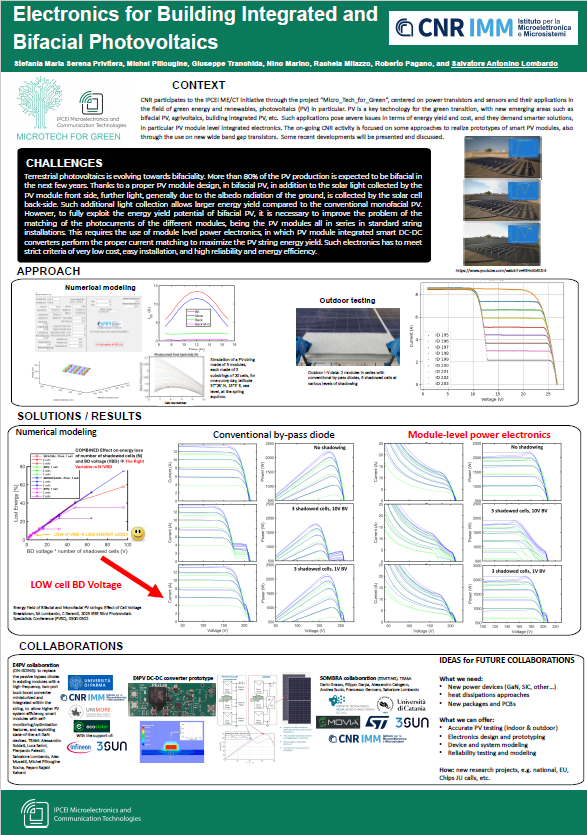
CNR outlined intelligent bifacial photovoltaic modules incorporating wide band gap transistors, supporting emerging use cases such as agrivoltaics and building-integrated photovoltaics. Salvatore Lombardo gives you more insight here.
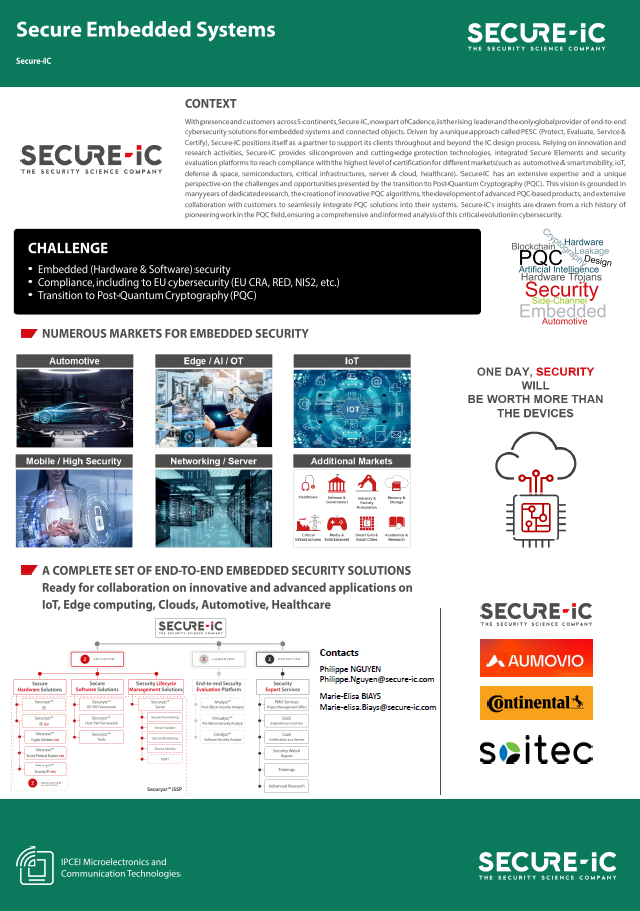
SECURE IC emphasized end-to-end hardware-based security solutions spanning IoT, automotive, healthcare, and cloud environments, reinforcing Europe’s cybersecurity resilience at silicon level.
The University of Malta, in collaboration with STMicroelectronics, is advancing automated backend assembly and testing methodologies integrating Smart Factory principles and AI-driven optimization.
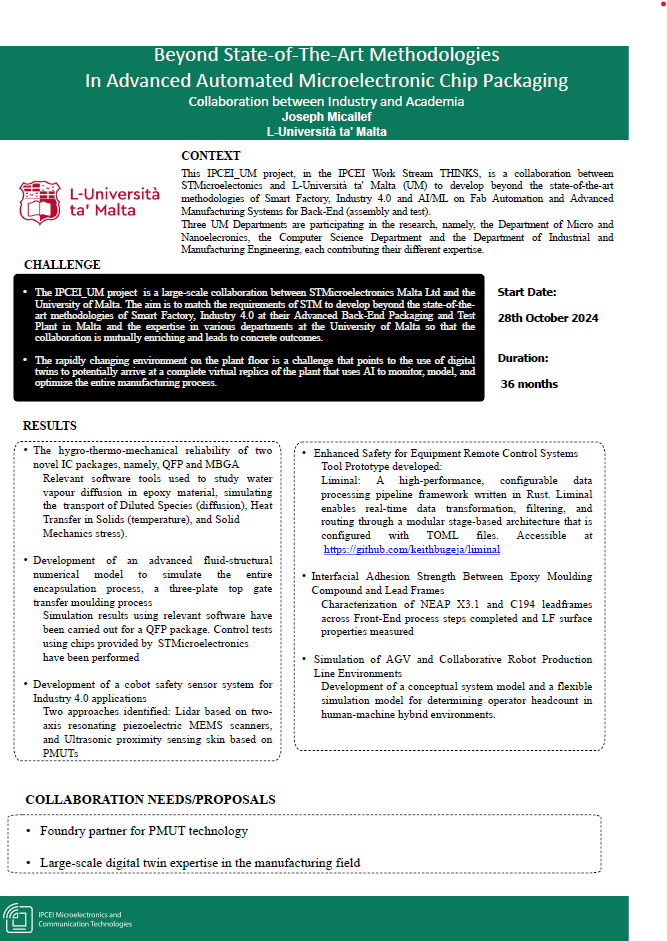
Working on future cooperations : Throwback on the IPCEI ME/CT GA’s posters.
The General Assembly reaffirmed that IPCEI ME/CT is a coordinated European effort combining industrial leadership, academic excellence, and research-driven innovation to secure long-term technological sovereignty in microelectronics and communication technologies.
For further information or to connect with the presenting organizations, stakeholders are encouraged to engage through the official IPCEI ME/CT coordination channels.