
ADTC 2025 – Grenoble, 15 May 2025
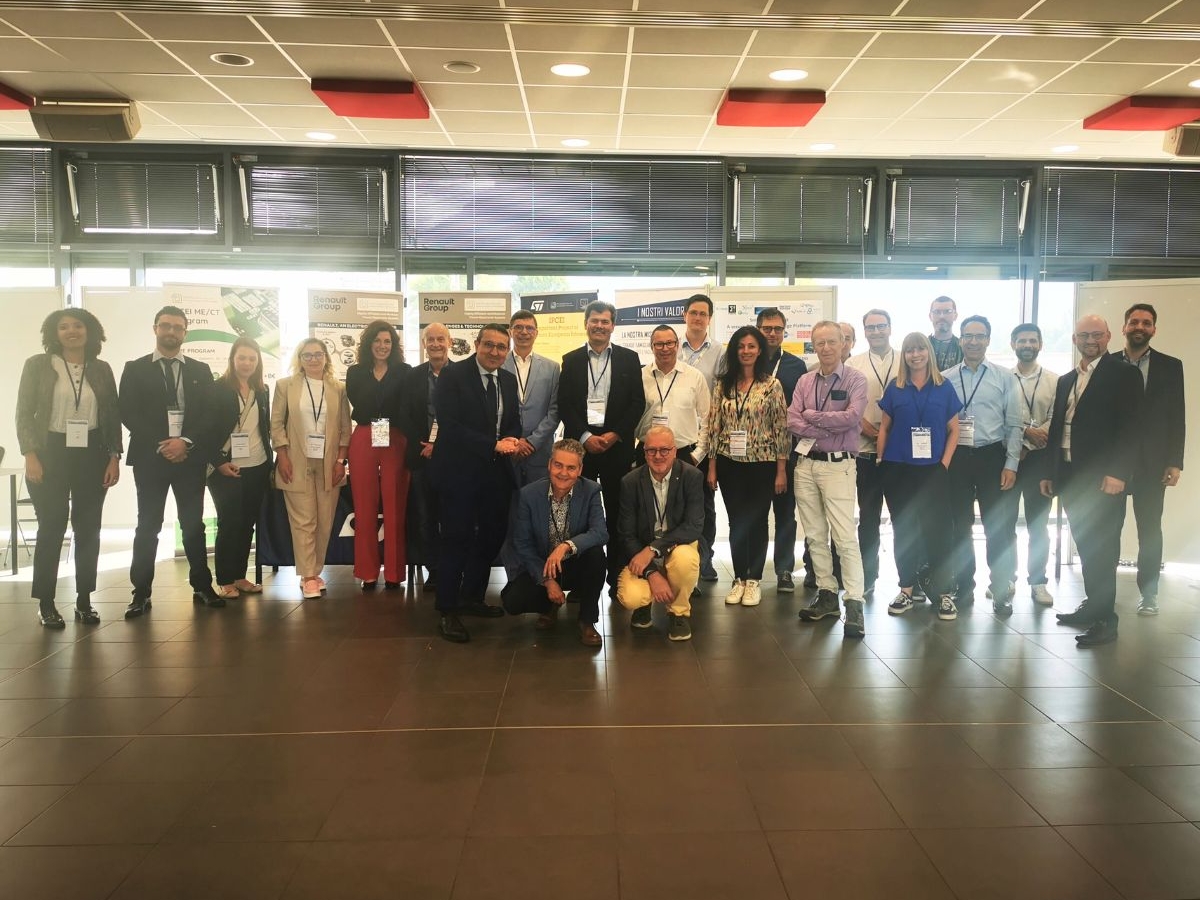
The IPCEI ME/CT Special Session at ADTC 2025 offered a unique snapshot of Europe’s coordinated industrial momentum in the field of microelectronics. By bringing together companies from across the value chain including wafer production, advanced displays, electric mobility, radar systems, and RF communication, the event illustrated how European industry is aligning technical excellence with strategic autonomy. Each presentation contributed a key piece to the broader vision: enabling Europe to compete globally through scalable, sustainable, and sovereign innovation in microelectronics.
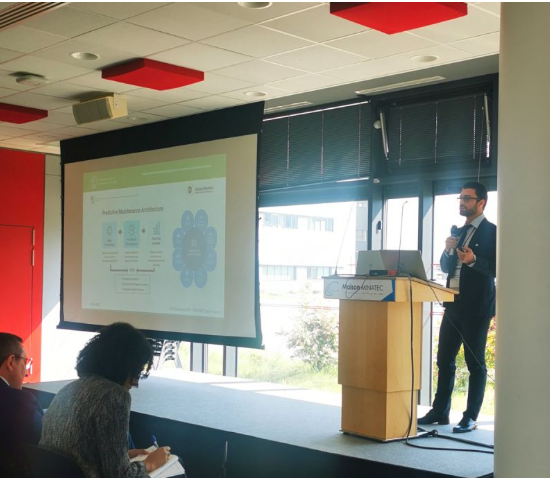
Advanced silicon wafers production thru innovative automation solutions - GlobalWafers
Presented by Riccardo Rizzato, this session focused on the fully automated 300mm silicon wafer production site in Novara, Italy. The facility integrates an advanced Automated Material Handling System (AMHS), combining OHTs, AGVs, and stockers to enable high-throughput, zero-downtime operations. Predictive maintenance is driven by real-time sensor data processed through edge computing and AI. The result is enhanced system uptime, extended equipment lifetime, and improved manufacturing efficiency, setting a new standard for smart semiconductor fabs.
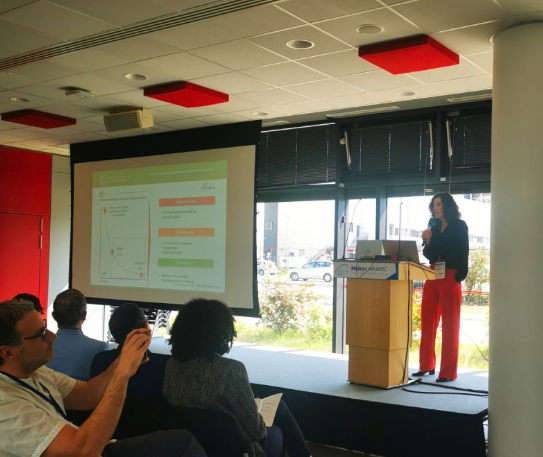
FlexiNOVA, a versatile microLED platform for high efficiency direct view display - Aledia
Muriel Dupont showcased Aledia’s breakthrough 3D GaN nanowire microLED technology, compatible with 200mm and 300mm silicon substrates. The FlexiNOVA platform offers customizable chip sizes down to 3.5 µm x 3.5 µm, with demonstrated high EQE and steady performance across scales. Designed for direct view displays in consumer and automotive applications, the technology supports both flip-chip and vertical configurations. With over 99% mass transfer yield and ongoing industrial ramp-up, FlexiNOVA aims to enable mass adoption of microLEDs in the coming years.
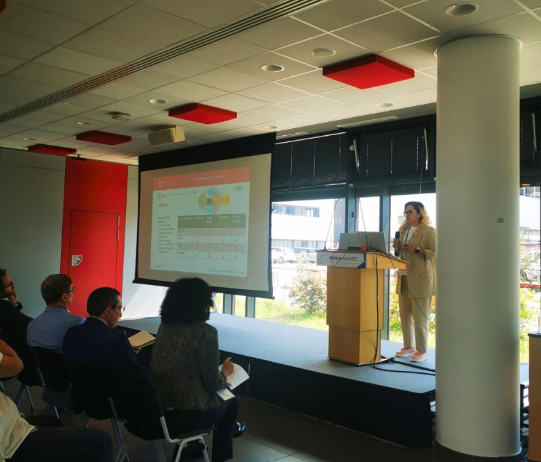
Future power drive system roadmap - Valeo
Dirk Brauer presented Valeo’s roadmap for next-generation electric powertrains within the framework of France 2030 and IPCEI ME/CT. Although technical details were limited, the focus clearly lies on electrification, energy efficiency, and integration of innovative materials and semiconductor components such as SiC and GaN. The strategy supports the decarbonization of mobility and reinforces Valeo’s position as a key actor in Europe’s transition toward smart and sustainable transportation technologies.
Advanced Radar Algorithms in Radar SDK - NXP Semiconductors
Ionela-Cristina Voicu introduced the NXP Radar SDK (RSDK), developed to enhance radar sensor systems for autonomous platforms. The RSDK includes advanced features such as interference mitigation algorithms capable of handling multiple interferences across correlation levels, and high-resolution angle processing using sparse antenna arrays and sub-degree enhancement. These algorithms complement the radar signal processing chain and are fully optimized for NXP’s radar SoCs, enabling accurate object classification for ADAS and autonomous driving.
New generation of engineered substrates for 6G technologies - Soitec
François Brunier presented Soitec’s portfolio of engineered substrates designed to meet the challenges of future RF and 6G applications. The enhanced FD-SOI and strain SOI (sSOI) technologies enable high-frequency operation above 100GHz, better antenna efficiency, and reduced power consumption, making them ideal for Satcom and mixed-signal integration. SmartGaN substrates, based on Smart Cut technology, deliver better crystalline quality, lower thermal resistance, and scalable wafer sizes up to 300mm, targeting FR2 and FR3 infrastructure. InPOSi (Smart Cut InP-on-Silicon) enables THz performance with CMOS compatibility and is positioned as the next-generation solution for datacom, mmWave, and D-band applications. These substrates aim to overcome the physical and economic limitations of bulk materials and support high-volume manufacturing.
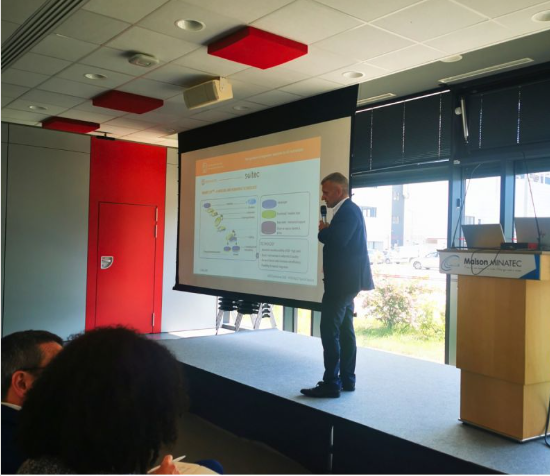
A unified European microelectronics ecosystem
Across all presentations, a common vision emerged: building a resilient, scalable, and sovereign European microelectronics value chain. Each company contributes a critical layer, from substrate innovation and chip integration to system-level optimization in displays, mobility, radar, and communications. IPCEI ME/CT serves as the industrial and collaborative framework that connects these efforts, supporting R&D, industrial scale-up, and strategic autonomy. Europe is no longer catching up; it is actively shaping the technological future through coordinated ambition, industrial rigor, and targeted innovation in connectivity, electronics, and mobility.