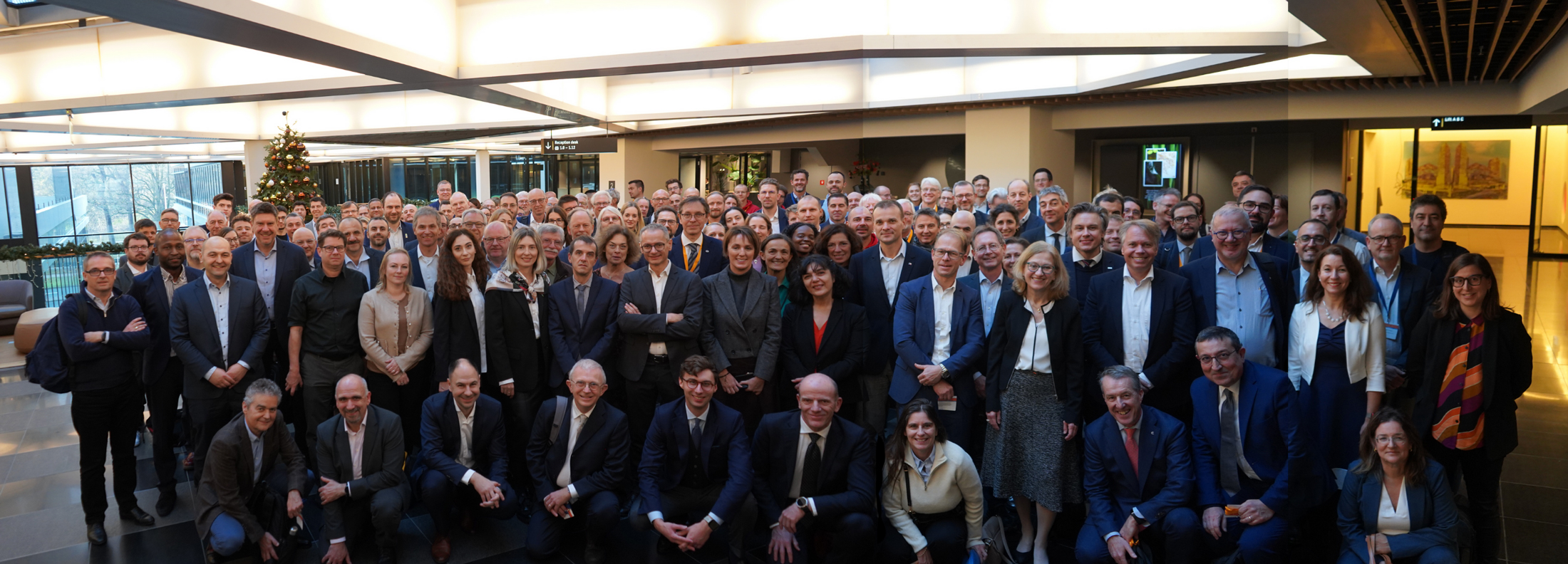
Under the chandeliers of The Hague Conference Centre and the vaulted ceiling of De Nieuwe Kerk, ministers, EU officials and semiconductor leaders met on 26–27 November for the IPCEI ME/CT General Assembly and Forum – two days that turned Europe’s microelectronic ambitions into a very concrete roll call of names, companies and alliances.
The Forum opened behind closed doors with the machinery of governance: the Public Authority Board, the Facilitation Group and the Transformers Group. On the industrial side, NXP’s Ferdinand Bell (Facilitation Group chair) and ams-OSRAM’s Martin Strassburg (deputy chair) anchored the discussion, aligning national funding and company roadmaps across the four workstreams: SENSE, THINK, ACT and COMMUNICATE.
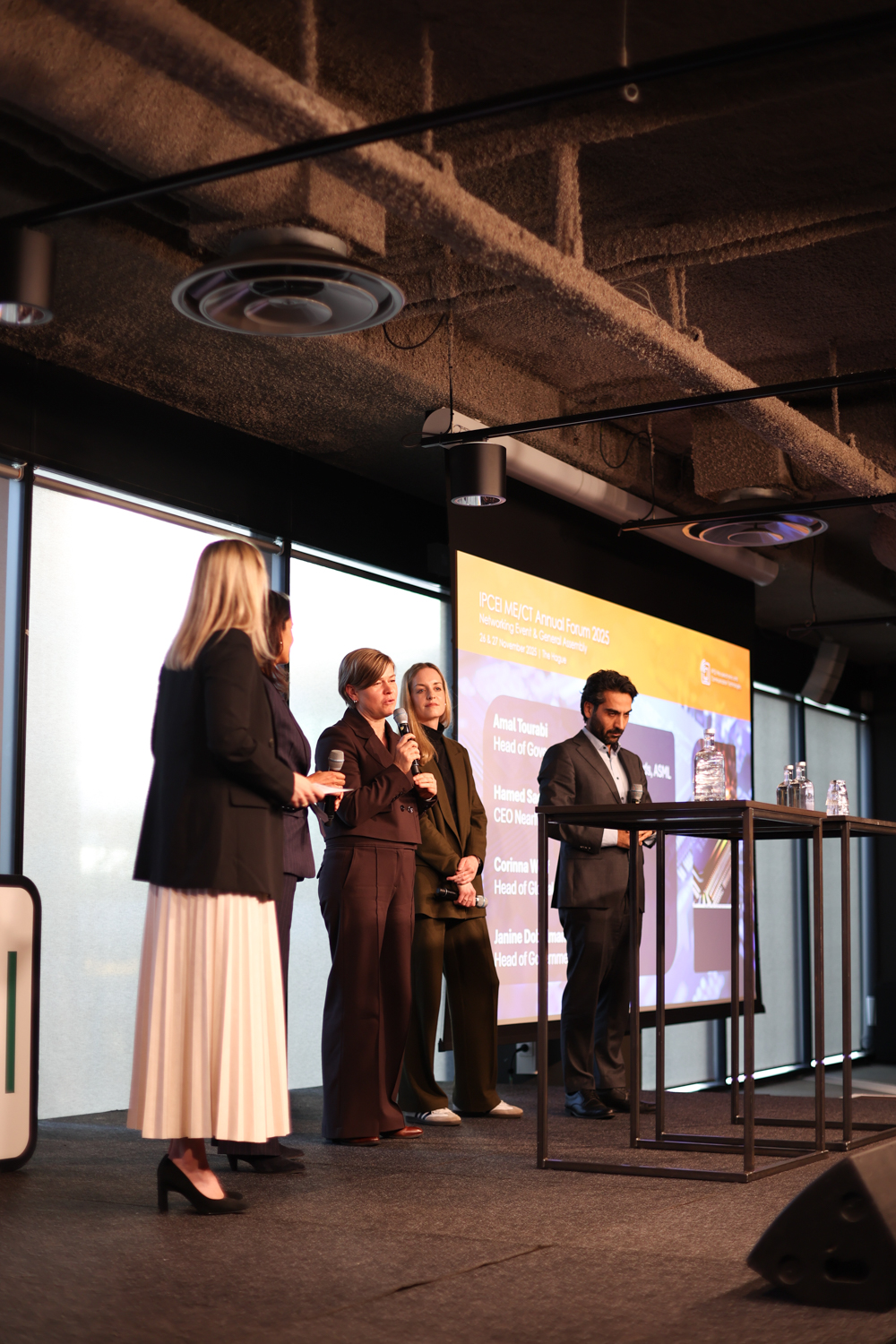
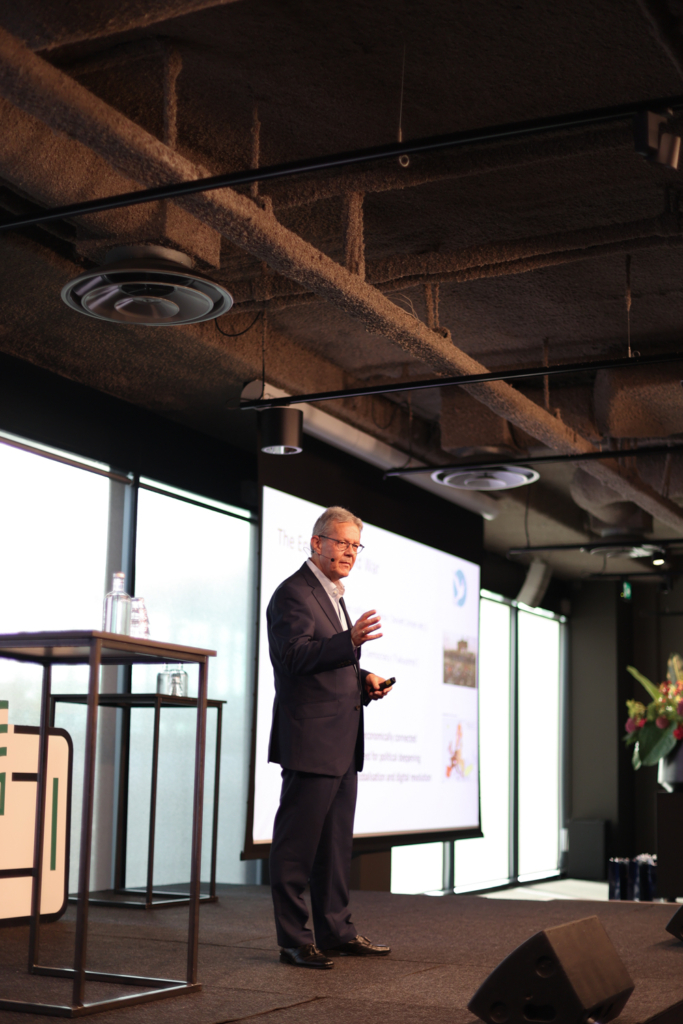
The public programme began with Dutch host Vincent Karremans, Minister of Economic Affairs, and the European Commission’s Stefano Selleri (DG CONNECT), who framed IPCEI ME/CT as a cornerstone of Europe’s chip strategy. Former ambassador and analyst Ron Keller widened the lens to geopolitics, arguing that microelectronics is now central to Europe’s security and competitiveness. That theme flowed into a high-profile industry panel with Hamed Sadeghian (Nearfield Instruments), Corinna Wolf (Infineon Technologies), Janine Dobelmann (NXP Semiconductors) and Amal Tourabi (ASML), all stressing how public money and private risk-taking must move in sync.
The General Assembly’s Administrative Reporting session, led by coordinator Christoph Reich (VDI/VDE-IT), gave the initiative its “state of the union”. Tim Schulze from the German ministry provided the public-authority view, Transformers Group representative Angelika Iberl explained how strategy becomes implementation, and ABGi’s Mirelle ter Veer walked participants through the administrative nuts and bolts. NXP’s Ferdinand Bell, this time as data-driven facilitator, presented progress and KPIs across the workstreams before a live poll and Q&A closed the formal part of day one.
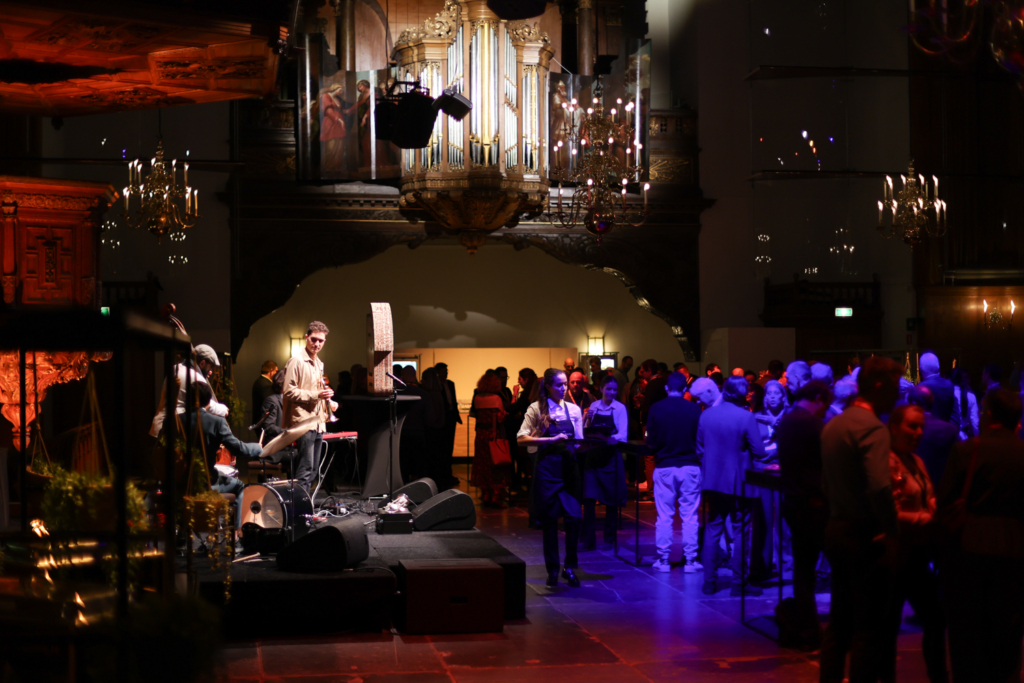
Networking then moved to De Nieuwe Kerk, where representatives from ASML, STMicroelectronics, Bosch, Nokia, Infineon, NXP, Valeo and a long tail of SMEs and R&D key players turned the day’s presentations into warm one-to-one conversations and future project leads.
Day two went deep into the technology. In the SENSE & THINK workshop, STMicroelectronics’ Vincent Tirard showcased next-generation CMOS image sensors for in-car safety, while Bosch’s Stefan Ruebenacke presented AI-enabled sensors that “understand” their environment. Sabine Kolodinsky (Ferroelectric Memory) and Silke Musa (Black Semiconductor) sketched European answers on low-power memory and graphene-based photonics; Tomáš Bort (MycroftMind) and Jaroslav Dzuba (Bizzcom) brought in AI and memristor innovation. The session was steered by NXP’s Patrick Pype, Bosch’s Thomas Fleischmann, AT&S’s Sandra Eger and Carl Zeiss SMT’s Gerhard Doell – a snapshot of how device makers, materials specialists and equipment suppliers are being knitted together.
In parallel, ACT & COMMUNICATE showcased Europe’s strength in power and connectivity. Michael Rüb (mi2-factory) presented a new high-energy ion implanter for advanced SiC devices, followed by Infineon’s Ainhoa Puyadena-Mier on the latest generation of CoolSiC MOSFETs and Valeo’s Dirk Brauer linking this to automotive applications via the “FastLane” project. On the communication side, Oscar Ciordia (KDPOF) outlined multi-gigabit in-vehicle optical links, Nokia’s Mirel Pehadzic introduced ultra-low-power 5G radio SoCs, and Robert Elvis Makon (Rohde & Schwarz) highlighted D-band RF front-ends. Moderators Cosimo Musca (STMicroelectronics) and Uwe Baeder (Rohde & Schwarz) tied these advances back to Europe’s broader chip and telecoms agenda.
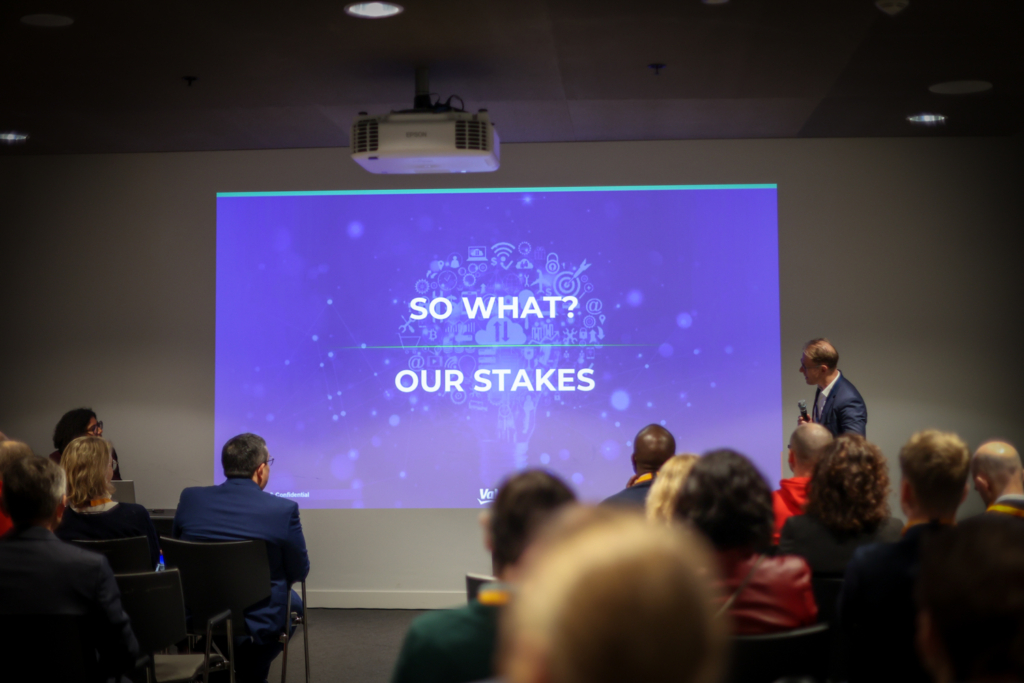
A Technical Reporting session then reunited the General Assembly, with Reich, Bell and Strassburg walking through progress in all four workstreams and giving the floor again to key industrial coordinators such as AT&S’s Sandra Eger. The message: the portfolio is maturing from project lists into interconnected industrial roadmaps.
The final thematic block, “Importance of spill overs in IPCEI”, shifted from fabs to ecosystems. Natalia Stolyarchuk (Bitkom), Anja Schulz (ams-OSRAM), Harry Kaib and Stefan Wunderer (both Nokia), Nicolò Guerini (STMicroelectronics Italy) and Anna Ryabokon (Infineon Technologies Austria) shared initiatives ranging from female entrepreneurship and “chiptainability” events to student hardware hackathons and cross-company collaboration formats.
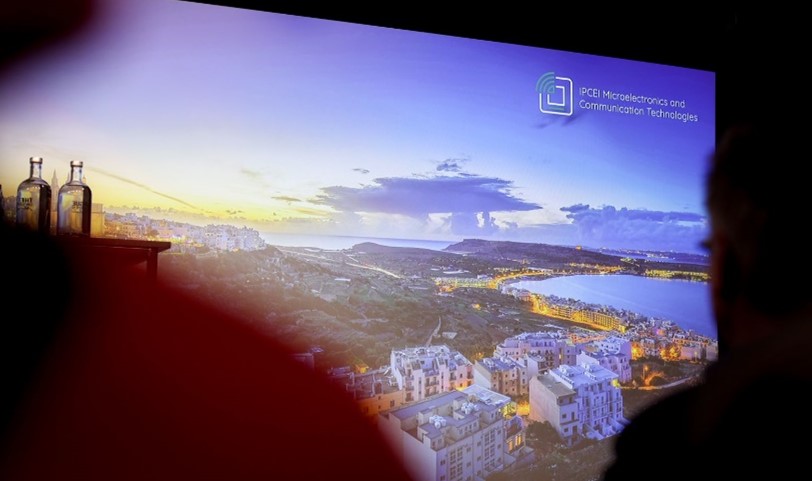
In the closing session, Christoph Reich and Mirelle ter Veer thanked participants and handed the baton to Malta, which will host the next edition.
As attendees left The Hague, the bottom line to keep is : through a dense web of names and dozens of corporate technologists – IPCEI ME/CT is steadily moving Europe’s semiconductor ambitions from policy documents to products, plants and people.