
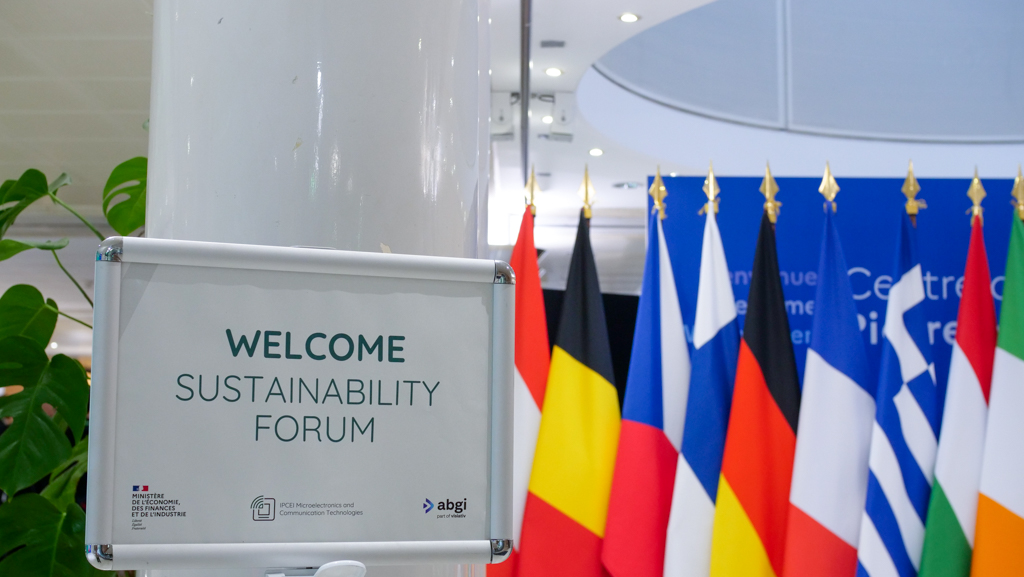
On November 27, 2024, the IPCEI ME/CT convened its first Networking Event, the Sustainability Forum at the Centre Pierre Mendès-France in Paris, gathering industry leaders, researchers, and policymakers to address the critical challenges and opportunities in the microelectronics sector. This event marked a milestone in fostering collaboration and advancing discussions on sustainability within the industry. Alongside the the Sustainability Forum, the second General Assembly further deepened the collective commitment to shaping a resilient and environmentally responsible microelectronics landscape.

Networking Event: Fostering Collaboration Across the Value Chain
The Networking Event was structured around two expert-led roundtable discussions, each focusing on key sustainability challenges and innovations:
Roundtable 1: Materials & Design - Shaping a Sustainable Future
Moderated by Oliver Haller (Infineon), the first roundtable centered on sustainability within the materials and design stages of the semiconductor value chain. The speakers provided a comprehensive analysis of how sustainable practices are transforming this critical segment:
- Michael Buenning (Wacker) outlined the sustainability journey of polysilicon production, a cornerstone of the semiconductor industry. Wacker’s integrated production processes leverage renewable energy sources to achieve a significant reduction in carbon emissions. Buenning emphasized the importance of closed-loop systems and collaboration to further improve the environmental footprint of these energy-intensive processes.
- Marco Sciamanna (MEMC) detailed MEMC's commitment to environmental and social sustainability. With ambitious targets such as achieving 100% renewable energy by 2040 and eliminating toxic substances from production, MEMC's strategies reflect a pragmatic yet forward-thinking approach to resource management and innovation in wafer manufacturing.
- Stefan Wunderer (Nokia) introduced Nokia’s evolving sustainability framework, highlighting innovations such as its Cloud RAN baseband chip architecture, which reduces energy consumption by one-third compared to traditional designs. Wunderer also addressed the long-term vision for 6G, which integrates sustainability as a core priority.
- Wolfgang Nüchter (Bosch) presented Bosch’s ambitious circularity strategies, showcasing how the company integrates reuse, repair, and recycling in its ECU production. Bosch’s initiatives demonstrate how industry leaders can tackle the dual challenge of resource efficiency and carbon neutrality.
The Q&A session that followed allowed participants to explore shared challenges, such as integrating renewable energy in high-consumption processes, overcoming technical barriers to recycling, and balancing cost considerations with sustainability goals.
Roundtable 2: Manufacturing & Circular Economy - Towards Greener Production Processes
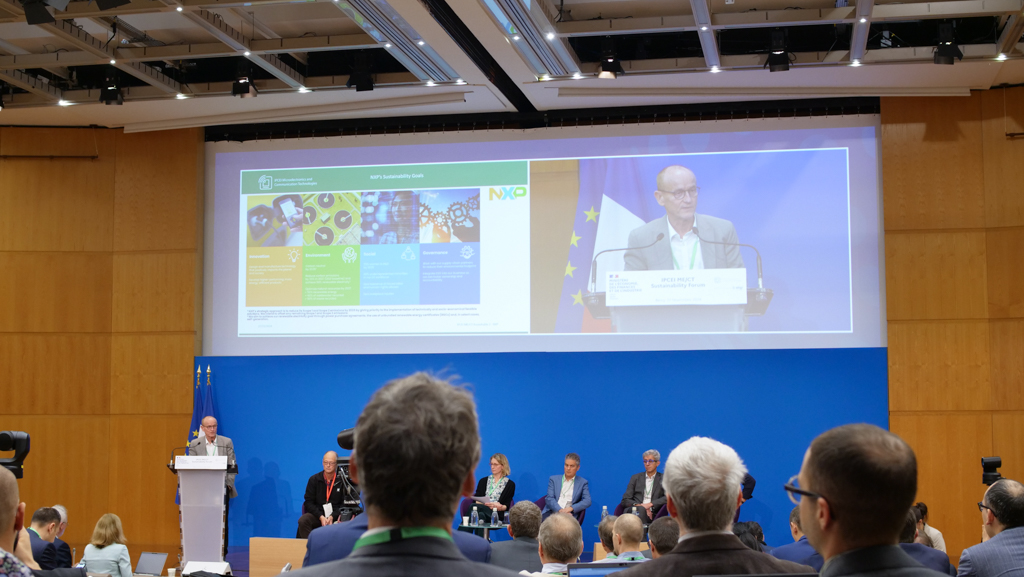
The second roundtable, moderated by Laurent Pain (CEA), examined the manufacturing processes and circular economy principles required to transition toward greener production. The speakers brought a diverse range of perspectives to the discussion:
- Ferdinand Bell (NXP) shared NXP’s holistic approach to decarbonization, emphasizing the importance of partnerships in achieving carbon neutrality by 2035. Bell highlighted the company’s integration of renewable electricity, wastewater recycling, and Scope 3 emission reductions.
- Cathy Batisson (Renault) addressed the role of electronics in sustainable mobility, presenting Renault’s circular economy models and innovations in vehicle-to-grid (V2G) technology. Batisson called for stronger collaboration between the automotive and microelectronics industries to optimize the lifecycle of electronic components.
- Dominique Thomas (STMicroelectronics) discussed STMicro’s decarbonization efforts, which include reducing high GWP gases, expanding recycling programs, and leveraging low-power device innovations. Thomas emphasized the importance of cross-sector cooperation in achieving impactful results.
- Dominique Martineau (Vitesco) focused on the challenges and opportunities in end-of-life management for power electronics. Martineau proposed standardizing repair and recycling methods to maximize the value of recovered materials and components.
- Azeddine Gati (Orange) underscored the critical role of telecommunications in carbon reduction, presenting Orange’s roadmap to achieving Net Zero Carbon by 2040. Gati’s insights highlighted the need for suppliers to align with telecom operators’ sustainability goals.
This discussion reinforced the importance of viewing sustainability through a systemic lens, where each stakeholder in the value chain plays an integral role in achieving a sustainable microelectronics ecosystem.
Workshop on the Corporate Sustainability Reporting Directive (CSRD)
The Sustainability Forum featured an in-depth workshop on the CSRD, led by ABGI. Tailored specifically for the microelectronics sector, the workshop provided participants with practical guidance on integrating sustainability reporting requirements into their operations. Key highlights included:
- Overview of CSRD Requirements: Participants examined how the directive complements the EU Green Taxonomy and Chips Act, forming a cohesive framework for sustainability reporting.
- Sector-Specific Applications: The workshop emphasized the unique challenges faced by the microelectronics sector, such as aligning CO2 reduction targets with energy-intensive manufacturing processes.
- Visualizing Interconnections: A pyramid model was introduced to illustrate the interplay between regulatory frameworks, offering a practical tool for R&D project managers to navigate these complexities.
The workshop concluded with actionable recommendations, empowering participants to leverage the CSRD to drive both compliance and innovation.
Looking Ahead: Building on Momentum
The IPCEI ME/CT Sustainability Forum set the stage for ongoing collaboration and innovation within the microelectronics industry. By addressing sustainability at every level of the value chain and fostering dialogue between diverse stakeholders, the event underscored Europe’s commitment to leading the transition toward a greener, more resilient microelectronics sector.
As the initiative progresses, the insights gained from this event will serve as a foundation for shaping future projects and strategies, ensuring that sustainability remains at the heart of the IPCEI ME/CT’s mission.